
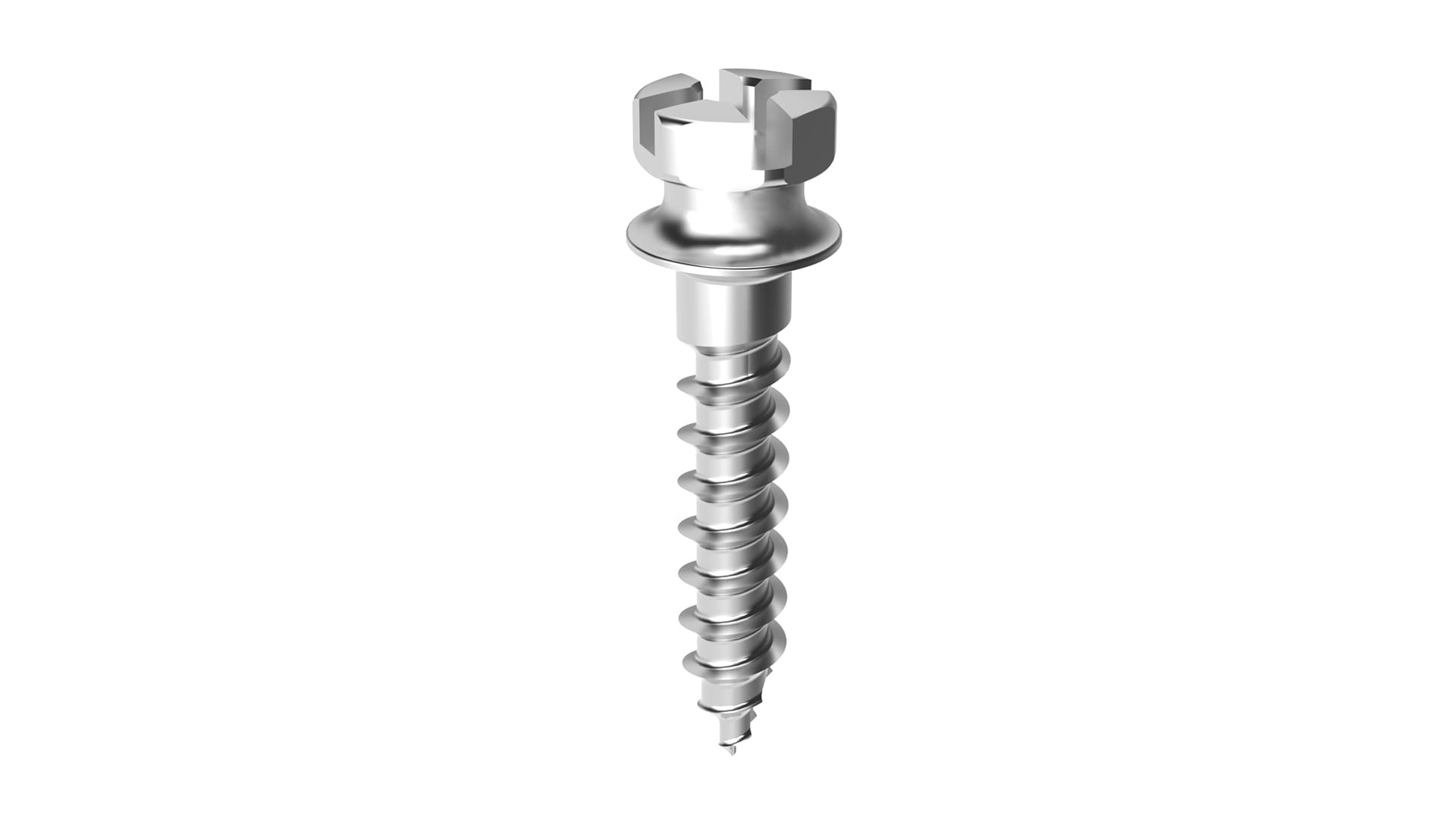
Some orthodontic movements are straightforward. Others need something extra to hold certain teeth steady while other teeth do the moving. That's where temporary anchorage devices, or TADs, come in. A TAD is a small, temporary titanium screw placed just beneath the gumline that gives us a fixed point to anchor against, something braces and aligners can't always provide on their own.
TADs aren't a treatment by themselves. They're a tool that expands what's possible with the treatment you're already considering, whether that's braces, clear aligners, or a MARPE appliance for jaw expansion. In the right case, a TAD can be the difference between needing a tooth extraction or jaw surgery and avoiding it entirely, or between a treatment plan that takes two years and one that wraps up in considerably less time.
TADs also require specific training and a level of precision not every orthodontic practice invests in offering. At Starling Orthodontics, we've built TADs into how we approach complex cases, so patients in Nashville and Brentwood have access to an option that isn't available everywhere.
Here's what TADs actually do for treatment, and how to know if they'd help in your case.

The real value of a TAD isn't the screw itself, it's what having a fixed anchor point lets us do with the rest of your treatment plan. A few of the outcomes TADs make possible:
Moving teeth in a specific direction without unwanted side effects. Without an anchor point, moving one tooth or group of teeth can cause other teeth to shift in ways you didn't intend, since every action creates an equal and opposite reaction in the mouth. A TAD holds the anchor teeth still so movement happens exactly where it's supposed to.
Avoiding extractions in cases that would otherwise need them. Some crowding or bite cases have traditionally been treated by removing teeth to create space. A TAD can sometimes create that same space by allowing us to move back teeth further than we could without one, avoiding an extraction altogether.
Closing open bites without jaw surgery. Open bites, where the front teeth don't meet when the back teeth are together, are one of the more difficult bite problems to correct with braces or aligners alone. TADs give us the anchorage needed to bring molars up and close the bite, which is often the difference between a non-surgical and a surgical treatment path, and tends to produce a more stable, natural-looking result than more traditional approaches of just elastics(rubber bands). The TAD approach also mimics movements similar to jaw surgery which usually lends itself to a more stable outcome.
Widening a narrow jaw in older teens and adults without surgery. Once the roof of the mouth (the palate) has finished fusing, a traditional palatal expander often isn't enough. TADs anchor a MARPE appliance directly into the bone, allowing us to widen the upper jaw non-surgically in patients who, a decade ago, would have needed a surgically assisted expansion.
Reducing reliance on patient compliance. Headgear and rubber bands work by anchoring against a patient's consistent, correct use, night after night. A TAD is anchored in the bone itself, so it works around the clock without depending on anyone remembering to wear anything.
Shortening total treatment time in select cases. Because TADs provide more predictable, direct control over tooth movement, some cases move more efficiently with a TAD in place than they would relying on compliance-based alternatives.
TADs come up most often in cases where a specific bite or alignment problem needs more anchorage than braces or aligners can provide on their own. You might be a candidate for TADs if your treatment plan involves:
We use TADs across all of our treatment systems, including WIN lingual braces, ceramic braces, metal braces, and 3M Clarity clear aligners. Whether a TAD makes sense for your case depends on your specific bite and goals, which is something we evaluate at your consultation rather than assuming upfront.

Placement is a quick, in-office procedure. We numb the area with a local anesthetic, then place the small titanium screw into the bone beneath the gumline. Most placements take just a few minutes, and most patients describe the sensation as similar to a routine dental injection, not a surgical experience. In addition, most patients report its even less discomfort than the first week following braces placement.
Once placed, the TAD does its job quietly in the background of your treatment. You may feel mild soreness for a day or two, similar to any other orthodontic adjustment, and there's a short adjustment period for keeping the area clean. TADs stay in place only as long as they're needed, typically several months to about a year, and removal at the end of treatment is just as quick and straightforward as placement.
A few things to expect with a TAD in place:
Because TADs are used to support a broader treatment plan rather than as a standalone treatment, the cost is typically added to your overall orthodontic treatment fee rather than billed as a separate procedure. At Starling Orthodontics, TAD placement generally adds $400 per device to your treatment cost, depending on how many are needed for your case.
For many patients, that added cost is offset by what a TAD helps you avoid, whether that's a tooth extraction, a longer treatment timeline, or in some cases, jaw surgery. We'll walk through exactly how TADs factor into your treatment cost and timeline at your consultation.
We accept most PPO insurance plans, and orthodontic benefits typically apply to the full treatment plan, TADs included. We also offer in-house payment plans and accept CareCredit® financing.
What does TAD stand for?
TAD stands for temporary anchorage device. It's a small titanium screw used during orthodontic treatment to provide a fixed point of anchorage, allowing precise control over how and where teeth move.
Are TADs the same as dental implants?
No. Dental implants are permanent replacements for missing teeth. TADs are temporary and are removed once they've served their purpose during orthodontic treatment, usually within several months to a year.
Does every orthodontist offer TADs?
No. TADs require specialized training and equipment beyond what's needed for standard braces or aligner treatment, so not every practice offers them. It's worth asking directly if a specific orthodontist offers TADs before assuming they do.
What is a MARPE appliance, and how does it relate to TADs?
MARPE stands for Miniscrew-Assisted Rapid Palatal Expansion. It's a non-surgical way to widen a narrow upper jaw in older teens and adults, using TADs anchored into the bone of the palate to apply expansion force directly, rather than relying on the teeth alone the way a traditional expander does.
Does getting a TAD placed hurt?
Placement involves a local anesthetic, so most patients feel little to nothing during the procedure itself. Mild soreness for a day or two afterward is common, similar to any orthodontic adjustment.
Can TADs really help me avoid jaw surgery?
In some cases, yes. TADs can provide enough anchorage to correct certain bite discrepancies, particularly open bites and narrow jaws treated with a MARPE appliance, without surgical intervention. Whether that applies to your case depends on the severity of the issue, which we evaluate individually.
Do TADs work with any type of braces or aligners?
Yes. We use TADs alongside WIN lingual braces, ceramic braces, metal braces, and 3M Clarity clear aligners, depending on what your treatment plan calls for.

TADs tend to come up in more involved treatment plans, cases where getting the details right matters, and where not every practice has the training to help. Patients throughout Nashville, Brentwood, and Williamson County choose Starling Orthodontics for these cases because every treatment plan is built around your specific bite, not a one-size-fits-all approach.
A few things patients consistently mention:
If your treatment plan involves a bite correction that seems complicated, or you've been told extraction or jaw surgery might be necessary, it's worth finding out whether a TAD could change that. We'll evaluate your case honestly and let you know what's possible.
Schedule your consultation today: call (615) 507-1660 or request an appointment online at starlingorthodontics.com. We serve patients from Nashville, Brentwood, Franklin, Nolensville, and throughout Williamson County.

Please call (615) 507-1660 or click below to schedule a consultaion appointment online.

Please call (615) 507-1660 or click below to schedule your complimentary orthodontic consultation online.


