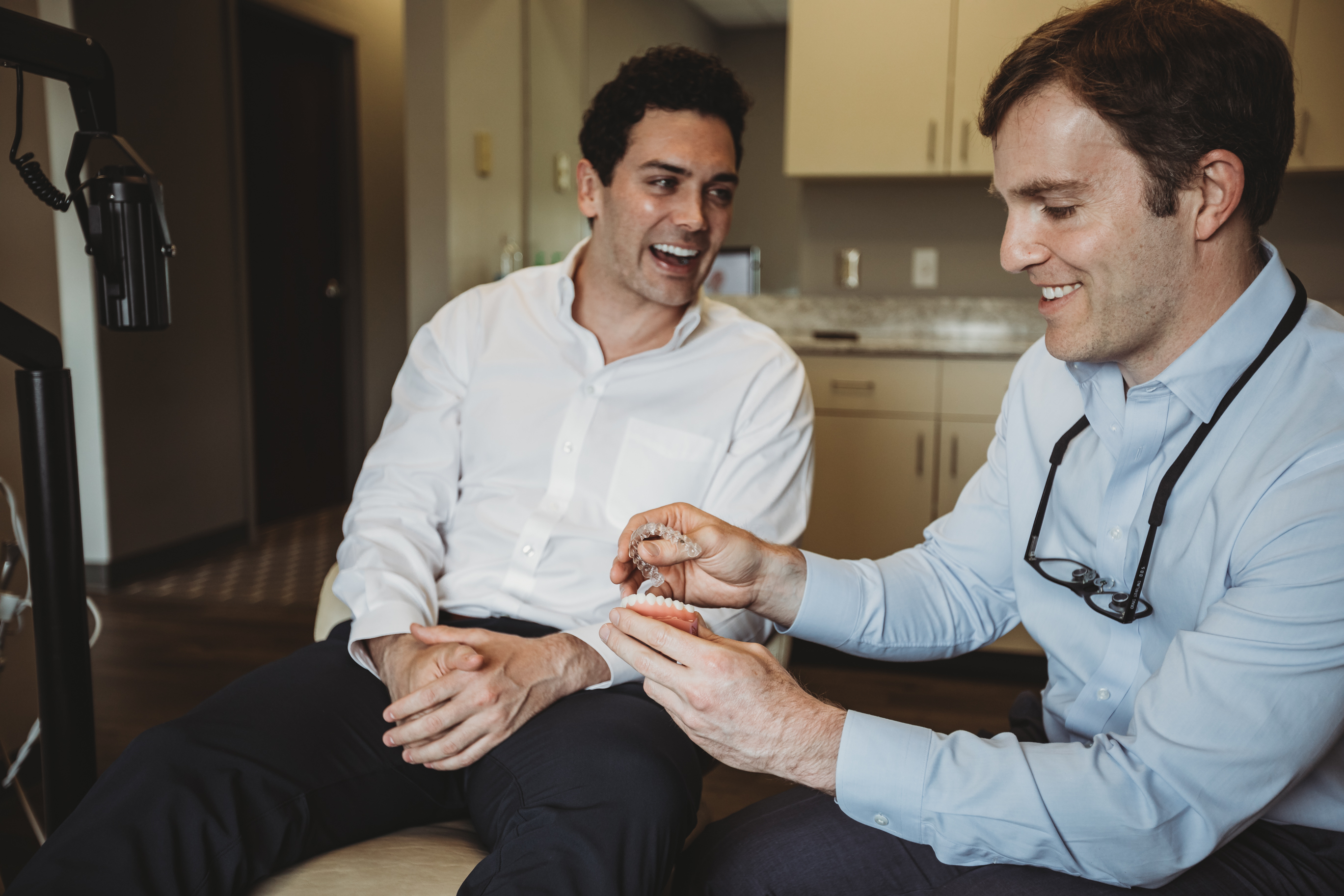
Adults can successfully straighten teeth at almost any age, improve bite function, and protect long-term oral health. In 2026, roughly one in four orthodontic patients in the US are adults. This is a dramatic shift from the 1990s when braces were almost exclusively for teenagers.
Modern braces for adults are more discreet and comfortable than appliances used two decades ago. Brackets are 30% smaller, materials are smoother, and digital treatment planning delivers precise results. Adults seek orthodontic treatment for various reasons. Some seek treatment after experiencing orthodontic relapse (teeth shifting years after teenage braces due to retainer non-compliance), while others never had access to treatment as a child.
Today’s orthodontic options include metal braces, ceramic braces, lingual braces, and clear aligners, all designed to fit professional and family life. This guide covers when adults should consider braces, the main types of appliances, treatment timelines, costs, and daily life with adult braces.
Teeth and jaws keep changing through your 30s, 40s, 50s, and beyond. Tooth loss causes neighboring natural teeth to drift, gum disease leads to bone resorption, and grinding creates uneven wear. All of which can worsen misaligned teeth over time.
Adults often seek adult braces for combined reasons: oral health improvements, better function (chewing, speech, jaw comfort), and enhanced self confidence. Untreated tooth alignment issues contribute to worn tooth enamel, broken fillings or crowns, and difficulty keeping crooked teeth clean. If you have existing dental work like crowns, implants, or bridges, adult orthodontic treatment remains possible with careful planning.
Crowded teeth occur when the jaw is too small for all adult teeth, while spacing develops from missing teeth or naturally small teeth. In adults over 40, crowding elevates decay and gingival inflammation risks by impeding cleaning. Some studies show 2-3 times higher plaque retention in crowded areas.
Braces or clear aligners gradually straighten overlapping teeth, while larger gaps may need restorative work like implants. Mild relapse crowding in lower front teeth is especially common in many adults who had braces as teens but stopped wearing retainers, with 50-90% experiencing this shift without lifelong retention.
Malocclusion means any misaligned bite, and adults can still treat these conditions successfully. Severe skeletal issues may require orthognathic surgery combined with orthodontic care.
Overbite: Upper front teeth excessively overlap lower teeth, causing tooth wear, jaw discomfort, and sometimes visible “gummy” smiles.
Underbite: Lower front teeth sit in front of uppers, creating difficulty chewing and premature wear on front teeth and restorations.
Crossbite: One or several upper teeth bite inside lower teeth, potentially causing chipping, gum recession, and bite problems.
Open bite: Front or side teeth don’t touch when back teeth are together, affecting speech and chewing efficiency, often causing lisping.
Traditional braces (metal, ceramic, or lingual) are usually preferred for moderate to complex bite corrections; invisible braces like aligners can handle mild to moderate cases.
Bad bite alignment and misalignment link directly to jaw pain symptoms (clicking, headaches), tooth wear, and gum inflammation in adult patients. Studies indicate 20-30% of untreated adults experience TMJ disorders from parafunctional habits like clenching.
Uneven bite forces crack fillings, chip porcelain crowns, and accelerate tooth loss over years. Crowded teeth trap food particles, worsening gingivitis and gum disease, especially after age 40 when gingival recession exposes roots.
Important Note: Any active periodontal disease must be treated before starting tooth movement. If there are some existing periodontal problems, these can usually be managed with the help of a Periodontist in conjunction with orthodontics.
Children typically start treatment between ages 10-14, benefiting from growth modification using palatal expanders or headgear. Once jaw growth stops in late teens, these skeletal modifications can become more difficult. Therefore, adult orthodontics generally works within existing bone structure. Newer technologies and techniques have blurred this line quite a bit in recent years, however.
Adult treatment plans must account for existing restorations, bone density, and coordination with periodontists or prosthodontists. The good news: adults exhibit superior compliance! (95% versus 70% in teens) This yields comparable success rates. Treatment may take slightly longer due to denser bone, but older adults typically see visible changes within 3-6 months.
Modern adult orthodontic care offers several appliance types. The best treatment plan depends on visibility concerns, orthodontic problems complexity, and budget. A 38-year-old executive with mild mandibular crowding might choose aligners for uninterrupted presentations, while someone with severe bite issues may need traditional metal braces.
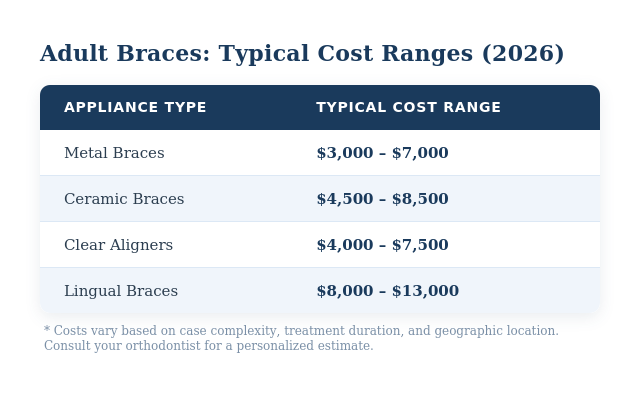
Traditional metal braces use small stainless-steel metal brackets bonded to teeth, connected by thin arch wires and elastic ties. They’re the most cost-effective option ($3,000-$7,500) and handle nearly all complexity levels, including significant bite corrections requiring precise brackets and wires control.
Today’s brackets are smaller and smoother than 1990s appliances. While they remain the most visible form of treatment, neutral or tooth colored elastics create a lower-profile appearance.
Ceramic braces use tooth colored brackets on teeth fronts, often paired with white arch wires for discreet appearance. They function like traditional braces but may be slightly larger and more fragile.
The brackets resist staining, but elastic ties can discolor from coffee, curry, or red wine between visits. Ceramic options cost more than metal and may not be suitable on lower front teeth in some cases.
Lingual braces place custom brackets and wires on inner tooth surfaces, making them virtually invisible in conversation and photos. They’re ideal for adults who present, perform, or appear on camera.
Initial speech effects (mild lisp) typically resolve within 1-2 weeks. Lingual systems require slightly longer chair time, advanced technology training, and custom laboratory work, making them the most expensive option ($8,000-$13,000). Please see more detailed information here.
Clear aligners are custom-made transparent plastic trays worn over teeth, changed every 1-2 weeks for gradual tooth movement. Key advantages include nearly invisible appearance, removability for meals, and easier oral hygiene without navigating around brackets.
Aligners work best for mild to moderate crowding and spacing. They must be worn 20-22 hours daily, demanding discipline from busy adults who travel or attend frequent meetings.
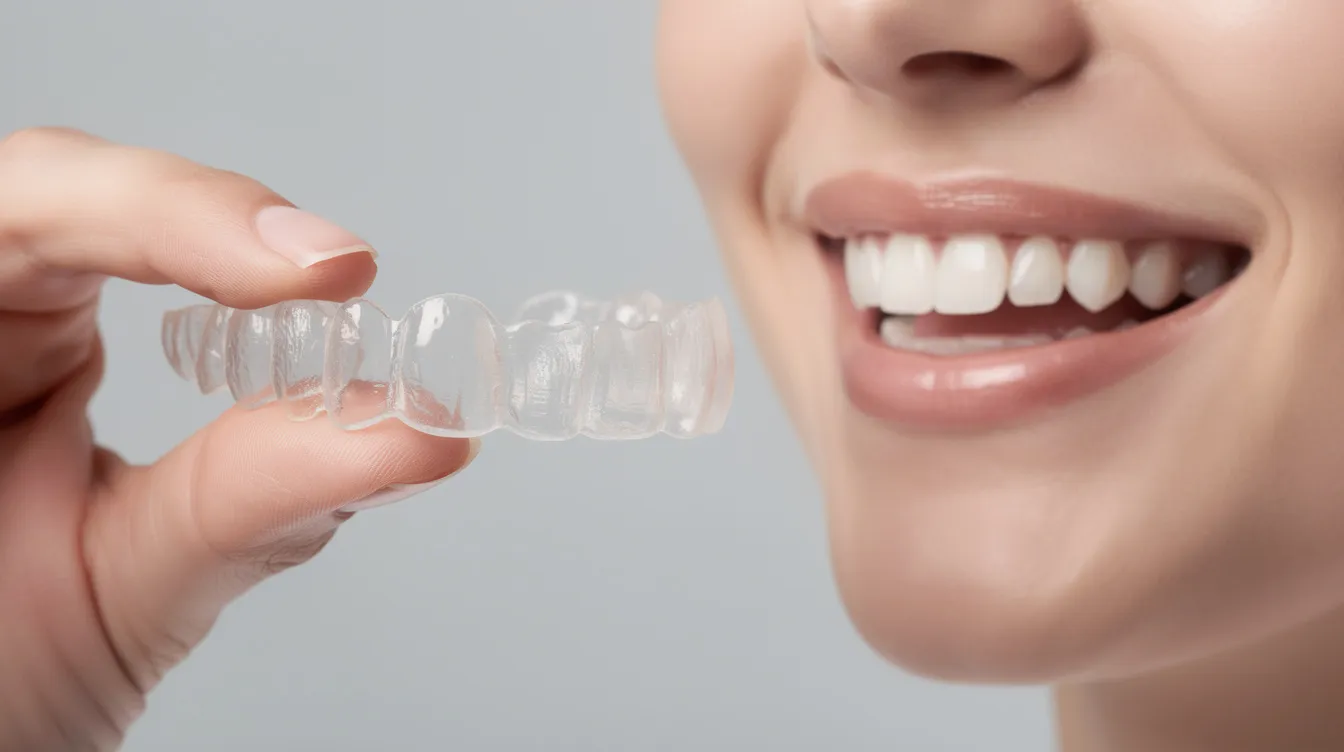
Self ligating braces feature built-in clips holding wires instead of elastic ties, available in metal or ceramic. Manufacturers claim smoother movement and comfortable visits, though overall treatment time remains similar for most adults.
Treatment success depends more on diagnosis and right orthodontist skill than bracket brand. Some adults combine aligners with limited braces (“hybrid” treatment) for specific movements.
No single appliance works best for everyone. The optimal choice balances appearance, complexity, lifestyle, and cost.
Adults in public facing roles such as sales, law, or media will often prioritize ceramic, aligners, or lingual systems. Even metal braces become more subtle with clear or silver elastics.
Severe crowding, large overbites, underbites, or crossbites respond best to fixed braces with precise control. Clear aligners excel for adult relapse cases and mild-moderate alignment issues.
Adults with extensive crowns, bridges, or implants require individualized planning. Wisdom teeth may need evaluation. Teeth with implants cannot be moved—appliances work around them as stable anchors. Only clinical examination and imaging (panoramic X-rays, 3D scans) determine appropriate orthodontic options.
All options require excellent oral hygiene and regular orthodontic appointments every 4-8 weeks.
Fixed braces: Brush after meals using a soft bristled toothbrush, floss with floss threaders or interproximal brushes, avoid sticky foods and hard items.
Aligners: Remove trays before meals, clean regularly, store properly. Unrestricted diet when trays are out.
Typical adult treatment lasts 12-30 months, with many straightforward cases finishing in 18-24 months. Minor relapse corrections using aligners may finish in 6-12 months, while complex bite corrections can exceed 2 years.
Adult jaw bones are denser with no active facial growth, making straightening teeth slightly slower than in adolescents. Additional needs such as restorative dentistry, gum therapy, or extractions must be sequenced carefully. Missed orthodontic appointments or poor aligner wear extend timelines.
Despite longer durations, visible changes appear within 3-6 months, keeping motivation high. The American Association of Orthodontists confirms adults achieve comparable success rates with proper compliance.
Fees vary by region and complexity. National averages in 2026:
Many dental plans historically limited benefits to minors, but some modern plans include partial adult coverage. When coverage exists, lifetime maximums typically range $1,500-$2,500.
Check whether coverage applies to specific appliances and any waiting periods. Bring insurance information to consultations for precise estimates.
Most orthodontic offices offer monthly payment plans over 18-30 months, often with low or no interest. Many adults use HSA or FSA accounts for pre-tax payments. Discuss costs transparently at your first consultation—down payment, monthly installments, and what’s included (retainers, X-rays, emergencies).
The first 1-2 weeks after braces or aligner placement, most adults experience mild soreness and speech changes. After this adjustment period, braces improve integration into normal routines.
Brush twice daily (ideally after meals) with a soft bristled toothbrush, angling bristles around brackets and gum line. Use orthodontic flossers, super-floss, or water flossers daily. For aligners, rinse and brush trays with mild soap—avoid hot water.
Consider fluoride toothpaste or mouthwash for decay prevention. The American Dental Association recommends maintaining excellent dental health throughout treatment.
Fixed braces: Avoid hard items (ice, raw carrots, hard nuts) and sticky foods (caramel, taffy, chewing gum). Cut apples and crusty bread into smaller pieces.
Aligners: Normal diet when trays removed; brush before reinserting.
During initial soreness, soft foods like yogurt, scrambled eggs, soft fruits, and pasta provide comfort.
Mild soreness lasting 1-3 days after adjustments is manageable with over the counter pain relief (acetaminophen, ibuprofen). Orthodontic wax protects cheeks from rubbing brackets.
Temporary lisps from lingual braces resolve within 1-2 weeks with practice. Clear aligners (Invisalign or other brands) may cause a bit of a lisp as well.
Contact your orthodontist regularly if experiencing severe pain or broken wires.
Adult orthodontics requires specialized expertise. Seek a specialist orthodontist (not general dentistry) with documented experience treating adult cases and complex bites.
Look for practices using advanced technology: digital 3D scanners, low-radiation imaging, and computer-aided treatment planning. Schedule consultations to discuss options, timelines, and costs.
No upper age limit exists for orthodontic treatment. Adult patients in their 50s, 60s, and 70s successfully receive braces with healthy teeth, gums, and supporting bone. Thorough examination determines candidacy.
Most adults with crowns, large fillings, or root canal treated teeth undergo treatment successfully. Implants cannot be moved, but serve as stable anchors while orthodontists plan around them.
Millions of adults such as teachers, executives, healthcare workers all wear braces or aligners without career interruption. Those concerned about visibility choose ceramic, aligners, or lingual options for a beautiful smile transformation.
Most adult patients visit every 4-8 weeks. Many practices offer early morning or late afternoon appointments. Brief emergency visits may be needed if something breaks.
Adult orthodontic treatment improves overall health, comfort, and confidence. Decades of clinical experience confirm “it’s never too late” to seek orthodontic treatment. Your teeth will continue shifting with age, so consider scheduling a consultation within the next month rather than postponing.
Modern adult braces and aligners fit real adult lives with families, jobs, and responsibilities. Whether you’re correcting dental issues from decades ago or addressing recent changes, the proper positions for your teeth are achievable. Take that first step toward straight teeth and improved dental health today.

Please call (615) 507-1660 or click below to schedule a consultaion appointment online.

Please call (615) 507-1660 or click below to schedule your complimentary orthodontic consultation online.


